You love the idea of a brighter smile. But there’s one thing holding you back: that sudden, sharp feeling when you sip an iced drink, bite into something cold or even breathe through your mouth on a chilly morning.
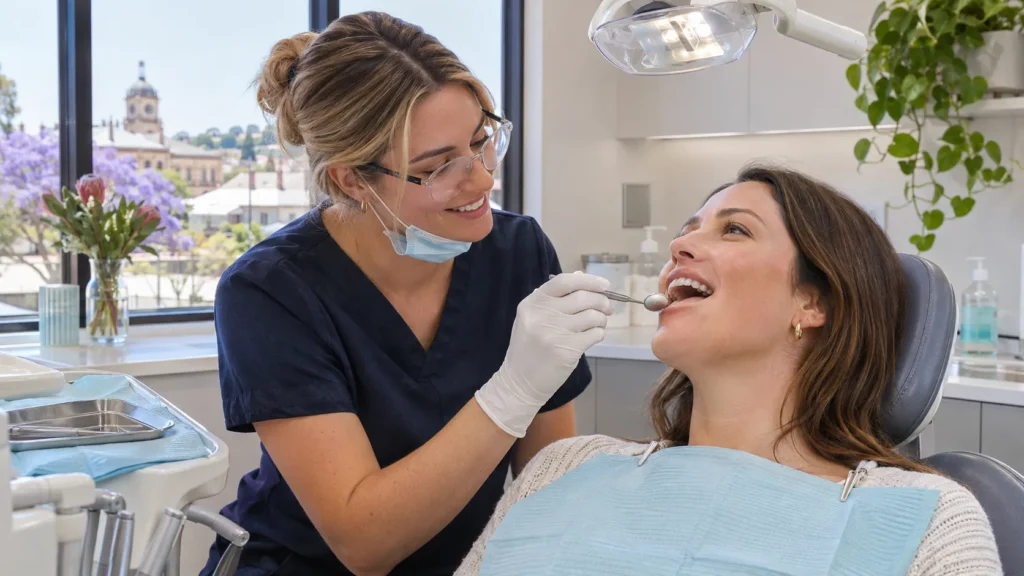
If your teeth are already sensitive, the thought of putting whitening gel on them might sound like a terrible idea.
It’s a reasonable concern. Teeth whitening can cause temporary sensitivity, and some people are more susceptible to it than others. The good news is that sensitivity doesn’t automatically rule out whitening. It does mean you need to understand what’s causing the discomfort before deciding whether treatment is appropriate.
For anyone researching professional teeth whitening Toowoomba, the most useful question isn’t simply, “How white can my teeth get?”
It’s this: “Can I improve their colour without making my teeth uncomfortable?”
Let’s explore what sensitive teeth mean for whitening, which options may be suitable, what to avoid and how to decide whether the treatment is worth considering.
Quick Answer: Can You Whiten Sensitive Teeth?
Possibly, yes. Some people with sensitive teeth can undergo dentist-supervised whitening after an examination, while others may need to address the underlying cause of sensitivity first.
Sensitivity can be associated with enamel wear, exposed tooth roots, gum recession, decay, cracks or other dental conditions. Whitening without investigating these problems may increase discomfort.
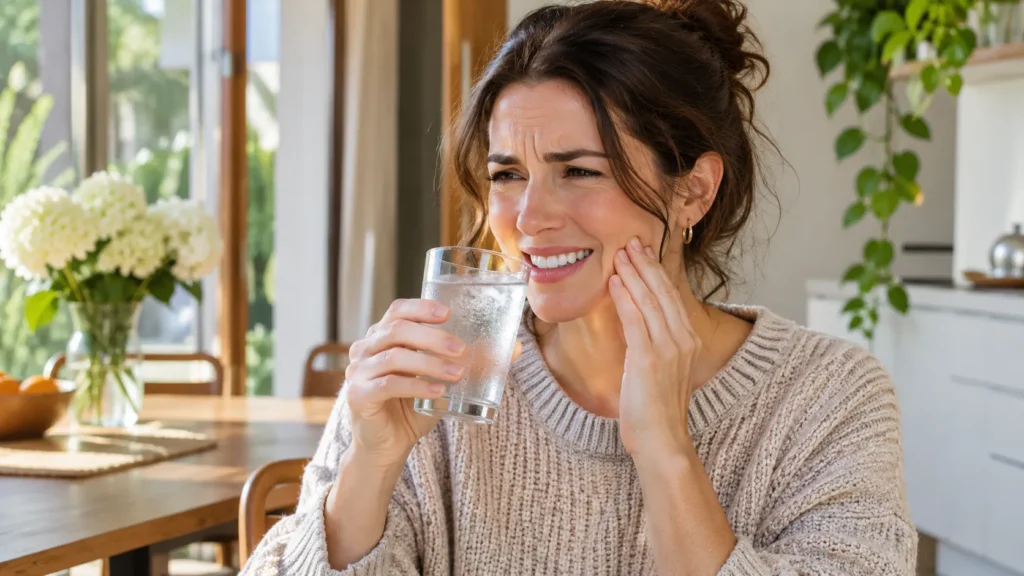
A dentist can assess your teeth and gums, discuss your previous experiences with sensitivity and determine whether whitening is suitable.
The important distinction: whitening is an elective cosmetic treatment. There is no reason to rush it when your oral health needs attention.
1. Why Do Some Teeth Feel Sensitive Before Whitening?
Imagine taking a sip of cold water and feeling a short, electrical jolt in one tooth.
That sensation may be a sign that the protective structures of your tooth are not providing their usual insulation.
Your tooth is made up of several layers. The outer enamel protects the underlying dentine, which contains microscopic channels connected to the tooth’s nerve tissues.
When dentine becomes exposed or stimuli can reach sensitive internal structures, everyday activities may cause discomfort.
Common contributing factors include:
- Gum recession: The gumline moves away from part of the tooth, exposing root surfaces that are not protected by enamel.
- Enamel wear: Acid exposure, grinding or aggressive brushing may contribute to the loss of protective tooth structure.
- Tooth decay: Cavities can lead to sensitivity, particularly when consuming sweet, hot or cold foods.
- Cracked teeth: Small fractures may cause discomfort when biting or expose sensitive tissues.
- Recent dental procedures: Some people experience temporary sensitivity following treatment.
- Existing dental restorations: Worn or defective fillings can sometimes contribute to discomfort.
Not every episode of sensitivity is serious, but recurring pain deserves an explanation.
Before exploring teeth whitening Toowoomba, it is sensible to establish whether your sensitivity is temporary, manageable or a symptom of something requiring treatment.
2. Why Can Whitening Make Sensitive Teeth More Sensitive?
Many whitening treatments use peroxide-based ingredients to break down compounds responsible for tooth discolouration.
These ingredients can penetrate the tooth and temporarily irritate sensitive structures. Some patients also experience irritation of the surrounding gum tissues.
The intensity and duration of discomfort can vary according to factors such as:
- The whitening formulation and concentration
- How frequently the product is applied
- The length of individual applications
- Your existing dental condition
- Previous sensitivity
- Whether the gel contacts soft tissues
- The treatment technique and professional supervision
A person who has never experienced tooth sensitivity may still notice temporary discomfort during whitening.
Someone who already has sensitive teeth may need a more cautious approach.
This is one reason dentist-supervised treatment can be valuable. The decision can be based on your clinical condition rather than a one-size-fits-all whitening kit.
3. Is Dentist-Supervised Whitening Different From a Shop-Bought Kit?
Walking through a pharmacy, you might see whitening strips, toothpastes, pens and other products promising a brighter smile.
Some may help manage surface stains or alter tooth colour to varying degrees. But a product sold over the counter cannot examine your enamel, identify a cracked filling or determine why you experience sensitivity.
A dental assessment provides that missing context.
| Consideration | Dentist-supervised whitening | Self-selected retail products |
| Examination before treatment | Can include an oral health assessment | Usually not included |
| Suitability for sensitive teeth | Individually assessed | Often left to the consumer |
| Whitening approach | Selected according to clinical needs | Limited to available product options |
| Existing restorations | Can be checked before treatment | May not be considered |
| Unexpected discomfort | Dental advice is available | May require a separate dental appointment |
| Expected colour change | Can be discussed realistically | Packaging may not reflect individual results |
This comparison does not mean every retail whitening product is unsafe. It means a professional assessment becomes particularly useful when discomfort is already present.
The Australian Dental Association recommends an appropriate dental examination before whitening and emphasises the need for patients to understand potential risks and realistic results.
For patients considering a teeth whitening dentist Toowoomba, an individualised conversation can be more valuable than simply choosing the strongest advertised treatment.
4. In-Chair or Take-Home Whitening: Which May Be Better for Sensitive Teeth?
It’s tempting to assume that faster whitening is always better.
However, when sensitivity is a concern, treatment intensity and flexibility matter.
In-chair whitening
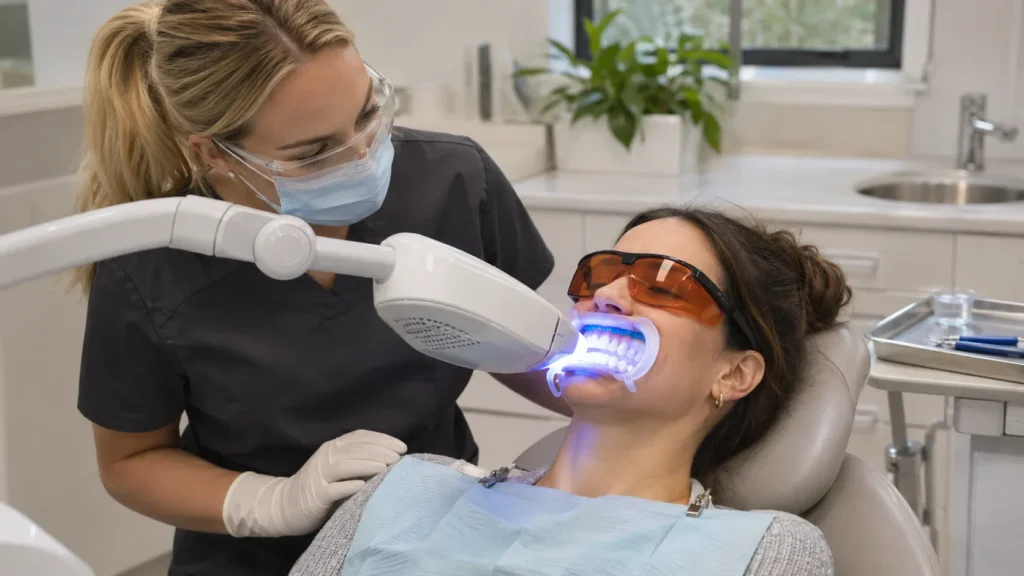
In-chair whitening is carried out in a dental setting, with the dentist or dental team following an appropriate treatment protocol.
Depending on the system, treatment may involve concentrated whitening gel, protective measures for the gums and carefully controlled application periods.
One potential advantage is that the clinical team can monitor your response during the appointment.
However, some patients experience temporary sensitivity, and a shorter treatment does not automatically mean less discomfort.
Dentist-supervised take-home whitening
Take-home whitening generally involves professionally supplied products, often with custom-fitted trays and instructions for use.
Depending on the prescribed system, the dentist may be able to adjust the application schedule or recommend a different approach if sensitivity develops.
The advantage for some patients is flexibility. Treatment can be planned around comfort rather than completed in one extended session.
However, take-home whitening can still cause sensitivity and must be used according to professional instructions.
Which should you choose?
Rather than asking which option is universally best, ask which is most appropriate for your teeth.
Your dentist may consider the amount of staining, enamel condition, existing restorations, oral health and preferred treatment schedule.
In some circumstances, the recommendation may be to postpone whitening.
That’s not a setback. It’s a sensible decision when the priority is protecting your teeth.
5. What Should Happen Before Whitening Sensitive Teeth?
A good whitening conversation begins before anyone discusses shades or photographs.
The first appointment should focus on understanding your oral health.
A dentist may examine your teeth and gums, review areas of sensitivity and consider whether further investigation is needed.
Important questions include:
- Are the sensitive areas caused by enamel wear or exposed roots?
- Is there any untreated decay?
- Are existing fillings in good condition?
- Do your gums appear healthy?
- Have you experienced recent tooth pain?
- Do you grind or clench your teeth?
- Have you previously reacted badly to whitening products?
- Are crowns, veneers or fillings visible when you smile?
For some patients, a routine examination and clean may be an appropriate starting point.
Professional cleaning can remove certain external deposits and stains, although it does not bleach the internal colour of natural teeth.
You can learn more about the role of preventive care through general dentistry at Westbrook Family Dental.
6. Can You Reduce Sensitivity During the Whitening Process?
There is no method that guarantees completely sensitivity-free whitening.
Nevertheless, your dentist may recommend practical measures designed to reduce discomfort.
Discuss your sensitivity before starting
Don’t wait until the gel is applied to mention that cold drinks make your teeth hurt.
Tell your dentist exactly which teeth are sensitive, what triggers the sensation and how long the discomfort lasts.
The more specific your description, the easier it is to assess your situation.
Consider a desensitising toothpaste
Some toothpastes contain ingredients intended to help reduce dentine hypersensitivity.
A dentist may recommend a suitable product and explain when to begin using it.
These toothpastes aren’t instant fixes for every cause of pain, so persistent symptoms still need assessment.
Follow the application instructions
Using extra whitening gel or leaving a product on longer than directed does not guarantee a better result.
It may increase irritation.
If your dentist supplies a take-home treatment, use the recommended amount and follow the prescribed schedule.
Avoid experimenting with multiple products
Whitening toothpaste in the morning, strips in the afternoon and a whitening pen at night might sound like an efficient routine.
In practice, combining products can create unnecessary exposure and make it difficult to identify what is causing discomfort.
Discuss any additional products with your dentist.
Report significant or persistent pain
Mild temporary sensitivity may occur, but severe, worsening or prolonged pain shouldn’t be ignored.
Stop using the whitening product and seek dental advice if concerning symptoms develop.
7. Will Teeth Whitening Work on Yellow Teeth, Brown Stains or Grey Teeth?
Not all discolouration responds to whitening in the same way.
This is where expectations become particularly important.
Yellow-toned natural teeth
Some yellow-toned natural teeth respond to bleaching, although the degree of change varies.
Underlying tooth structure influences the final shade.
Coffee and tea staining
Regular tea and coffee drinking can contribute to external staining.
Some surface stains may improve with professional cleaning, while intrinsic colour changes may respond differently to whitening.
Brown marks
Brown discolouration can have several causes, including staining and developmental changes.
A dentist should identify the likely cause before recommending treatment.
Grey-looking teeth
Grey discolouration may be linked to deeper changes within the tooth and may not respond predictably to conventional whitening.
A tooth that has suddenly changed colour, particularly after trauma, should be assessed rather than simply whitened.
White spots
Whitening does not necessarily remove white spots, and it may make differences in tooth colour more noticeable, particularly during the early stages of treatment.
A dentist can discuss whether another approach is more suitable.
The objective should be realistic improvement, not an artificial shade that doesn’t suit your teeth.
8. What If Your Front Teeth Have Fillings, Crowns or Veneers?
Here’s something many people discover only after purchasing a whitening kit: dental restorations don’t respond to whitening the same way natural tooth enamel does.
A crown, composite filling or veneer generally retains its existing shade when the surrounding natural teeth become lighter.
This can leave a visible colour difference.
For example, imagine that your two front teeth have old composite restorations that were colour-matched several years ago.
If you whiten the surrounding teeth, those restorations may become more noticeable.
You might then need to consider whether replacing a visible restoration is worthwhile. Replacement is not always necessary and should be based on clinical condition, appearance goals and the cost and risks involved.
Patients considering more than whitening can explore cosmetic dentistry Toowoomba to understand the broader range of possible approaches.
9. How Long Do Whitening Results Last?
There isn’t one answer that applies to everyone.
The appearance of whitened teeth can change over time because of natural ageing, diet, oral hygiene and other individual factors.
Coffee, tea, red wine and tobacco can contribute to further staining.
Some people maintain an appearance they are happy with for a considerable period, while others notice changes sooner.
Whitening also doesn’t permanently prevent future discolouration.
Instead of planning repeated whitening sessions without advice, discuss a sensible maintenance approach with your dentist.
Frequent or excessive whitening may contribute to unnecessary sensitivity.
Everyday habits that may help
- Brush twice daily using fluoride toothpaste.
- Clean between your teeth regularly.
- Attend dental examinations according to your individual needs.
- Avoid smoking and tobacco use.
- Rinse with water after stain-producing drinks when practical.
- Seek advice before repeating whitening treatments.
There is no need to give up every food or drink you enjoy. A balanced approach is more realistic than a long list of restrictions.
10. Could Another Cosmetic Treatment Be More Suitable?
Sometimes whitening isn’t the right answer, even when the concern is tooth colour.
Perhaps one tooth is darker than the others.
Perhaps a visible restoration has changed colour.
Or perhaps you also have a chipped edge that makes the tooth appear uneven.
In these cases, a dentist may discuss alternatives after examining the affected teeth.
Depending on the situation, options could include monitoring, cleaning, replacing a defective restoration, composite bonding or a veneer.
Each approach has different indications, limitations and long-term maintenance requirements.
For patients with more complex aesthetic concerns, dental veneers may be one of the options worth discussing. Veneers can change the appearance of a tooth, but they may require irreversible preparation and are not a substitute for treating dental disease.
Whitening should never be presented as the answer to every smile concern.
11. Five Questions to Ask Before Booking Whitening
Bring these questions to your consultation:
- What is causing my tooth sensitivity? Establish whether it is safe to proceed.
- How likely am I to experience discomfort? Ask about your personal risk, not just general statistics.
- Which whitening method would you recommend for me? Understand why it has been selected.
- What shade change is realistic? Discuss possible outcomes without expecting a precise guaranteed result.
- What should I do if my teeth hurt afterwards? Know when to stop treatment and contact the clinic.
An additional question is worth asking if you have visible restorations: will the colour of my existing fillings or crowns still match?
A short discussion beforehand can prevent disappointment later.
Frequently Asked Questions
Is professional teeth whitening painful?
Not necessarily. Some patients experience little or no discomfort, while others develop temporary tooth sensitivity or gum irritation. Existing sensitivity may affect treatment suitability.
Can I whiten my teeth if I have receding gums?
Possibly, but exposed root surfaces may be more sensitive. A dentist should assess gum recession and advise whether treatment is suitable.
Is whitening toothpaste enough to change my tooth colour?
Whitening toothpastes may help remove some surface stains, but they generally do not produce the same intrinsic colour change as peroxide-based bleaching.
Can I use whitening strips if my teeth already hurt?
It is better to establish the cause of pain before using whitening products. Toothache or persistent sensitivity may indicate a dental problem requiring assessment.
Will whitening damage my enamel?
Dentist-supervised whitening used appropriately is generally considered effective, but inappropriate product use, excessive exposure and underlying dental problems can increase risks. Your dentist should discuss your circumstances.
How white will my teeth become?
Results vary with natural tooth shade, the cause of discolouration, treatment method and individual response. A particular shade cannot be guaranteed.
A Brighter Smile Shouldn’t Come at the Expense of Comfort
If your teeth are sensitive, you don’t have to choose between rushing into whitening and abandoning the idea completely.
The sensible approach is to understand your teeth first.
Sometimes that means treating an underlying problem. Sometimes it means choosing a different whitening approach. And sometimes it means accepting that the healthiest option is to avoid bleaching.
The best cosmetic decision is one you can make with accurate information, realistic expectations and an understanding of the risks.
About Westbrook Family Dental
At Westbrook Family Dental, we provide general, preventive and cosmetic dental care for patients in Westbrook, Toowoomba and surrounding communities.
Our clinic offers teeth whitening services and consultations to help patients explore options based on their oral health and personal goals.
If you’ve been considering whitening but are concerned about sensitivity, our dental team can assess your teeth, discuss the available options and help you decide whether treatment is appropriate.
Visit us: Shop 2/85 Main Street, Westbrook QLD 4350
Phone: (07) 4529 7477
Website: https://westbrookdental.com.au/
Book an appointment to discuss your whitening concerns and find out which options may suit your smile.




Comments are off for this post.