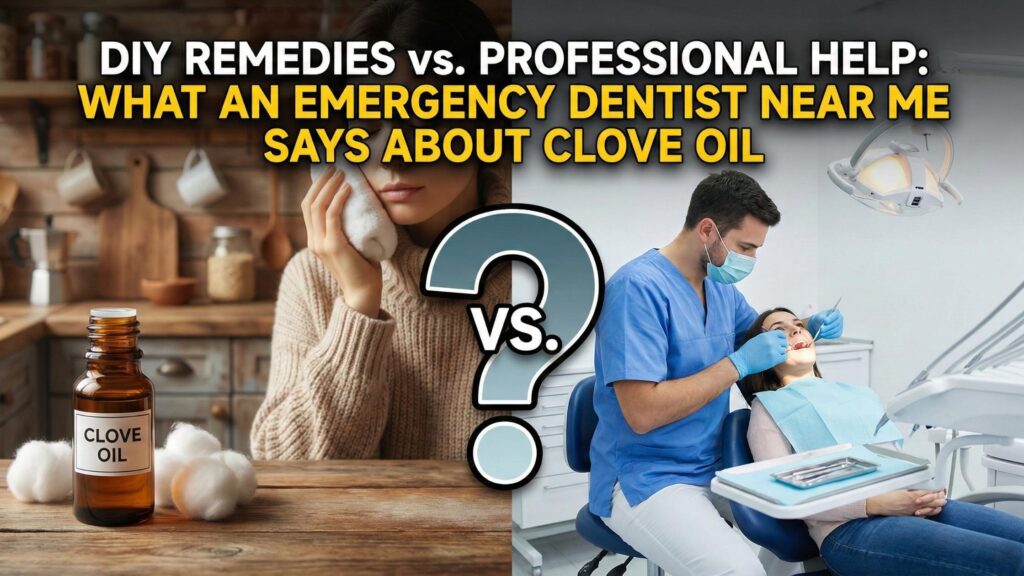
It is 2:00 AM on a Tuesday. The house is quiet, but you are wide awake. A throbbing, relentless pain is radiating from your jaw to your ear. You pace the kitchen floor, scrolling frantically through your phone, looking for anything that will stop the agony.

You stumble upon a popular home remedy: Clove Oil. The internet swears by it. But while you rummage through your pantry or medicine cabinet, there is a vital step you must not skip. You need to stop scrolling and find an Emergency dentist near me.
While home remedies can provide fleeting relief during the car ride to the clinic, they are never a substitute for professional care. Understanding the difference between masking the pain and treating the problem is the key to saving your tooth and protecting your health.
The Science Behind the Scent: Why Clove Oil Works
Clove oil has been used in traditional medicine for centuries, and for good reason. The primary active ingredient in clove oil is a compound called eugenol. Eugenol is a natural anesthetic and antibacterial agent. When applied to a painful tooth or gum area, it creates a numbing sensation that can dull the sharp edge of a toothache.
For many patients, that initial numbness feels like a miracle. It allows you to breathe, relax your jaw, and perhaps get a few hours of sleep. However, this relief is deceptive. The eugenol is working on the surface, numbing the soft tissues and the nerve endings it can reach.
Unfortunately, most severe toothaches are caused by issues deep within the tooth structure—such as an infection in the pulp or a fracture reaching the root. Clove oil cannot penetrate deep enough to resolve the underlying pathology. It essentially turns off the fire alarm while the fire continues to burn.
The Difference Between Management and Cure
There is a distinct difference in dentistry between managing symptoms and curing the disease. Clove oil is a management tool. It is akin to putting a bucket under a leaking roof; it stops the floor from getting wet, but it doesn’t fix the hole in the shingles.
What Clove Oil Can Do:
- Temporarily numb the area around a painful tooth.
- Reduce surface bacteria due to its antiseptic properties.
- Provide a placebo effect that helps reduce anxiety.
What Clove Oil Cannot Do:
- Kill Deep Infection: It cannot reach bacteria inside the root canal.
- Fix Structural Damage: It cannot repair a cracked or fractured tooth.
- Drain an Abscess: It will not alleviate the pressure of a pus-filled infection at the root tip.
By relying solely on the oil, you allow the bacteria to multiply. What starts as a simple cavity can escalate into a severe abscess that spreads infection to your jawbone or even your bloodstream.
The Risks of Waiting: When DIY Goes Wrong
The biggest danger of home remedies isn’t necessarily the remedy itself, but the time it wastes. Pain is your body’s signal that something is wrong. When you silence that signal without seeing a professional, you risk losing the tooth entirely.
We often see patients who managed their pain with clove oil for weeks, only coming in when the swelling became unbearable. By that stage, the tooth structure is often too compromised to be saved by a filling or a root canal.
Addressing Tooth Loss
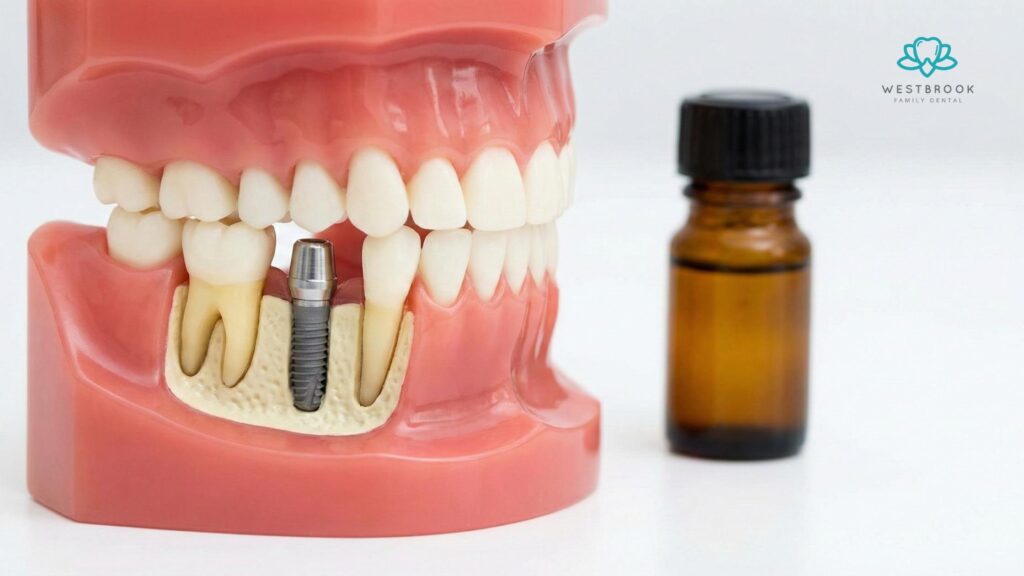
If you have waited too long and the tooth must be extracted, you are not out of options. Modern restorative dentistry has advanced significantly. If a tooth cannot be saved due to delayed treatment, you may need to look for dental implants near me to restore your chewing function and jaw health.
Dental implants are the gold standard for tooth replacement because they mimic the natural tooth root, preventing the bone loss that typically occurs after an extraction. While we always prefer to save your natural tooth, knowing that high-quality replacements are available can provide peace of mind.
Visible Damage and Aesthetics
Sometimes, the emergency isn’t just about pain—it’s about a visible break. Perhaps you bit down on a popcorn kernel and chipped a front tooth. Clove oil might soothe the jagged edge, but it won’t fix your smile.
In these cases, you need a restorative expert. Searching for a cosmetic dentist near me will lead you to professionals who can use bonding, veneers, or crowns to repair the chip immediately. A cosmetic approach ensures that the repair is not only functional but also indistinguishable from your natural teeth.
Safety First: Clove Oil and Children

One of the most frequent questions we receive involves pediatric dental pain. When a child wakes up crying with a toothache, parents are desperate to help. However, great caution is required when using essential oils like clove oil on children.
The Risks for Kids
Undiluted clove oil is potent. In young children, it can cause:
- Chemical Burns: Their gum tissue is much more sensitive than an adult’s.
- Toxicity: If swallowed in significant amounts, essential oils can be toxic to children.
- Aspiration: The strong taste can cause gagging or choking.
Professional Pediatric Care
Instead of reaching for the oil, you should immediately look for a specific professional. When you are looking for a Dentist near for kids, you are looking for a provider who understands how to manage pain safely in developing bodies.
We understand that in a moment of panic, grammar goes out the window. Parents often type “Childs dentist near me” into their search bars, hoping for a quick solution. Regardless of how you find us, the priority is getting a professional assessment.
A qualified Children dentist near me will always recommend acetaminophen or ibuprofen (dosed by weight) over topical oils for children. These medications reduce inflammation internally without the risk of burning delicate gum tissue.
How to Apply Clove Oil Safely (If You Must)
If you are in a situation where you cannot get to the dentist immediately—perhaps you are camping or stuck in a severe weather event—and you choose to use clove oil, you must do so correctly to minimize tissue damage.
- Dilute It: Never apply pure essential oil directly to the gums. Mix a drop of clove oil with a few drops of a carrier oil, such as olive oil or coconut oil.
- Use a Cotton Ball: Dip a small piece of cotton into the mixture. Squeeze out the excess so it is not dripping.
- Target the Tooth: Place the cotton gently against the tooth or into the cavity if there is a hole. Try to avoid the gums and inner cheek.
- Do Not Swallow: Keep the mixture in your mouth for a few minutes, then spit the cotton out and rinse your mouth gently with warm water.
Remember, this buying you hours, not days.
Other Safe Home Remedies While You Wait
While waiting for your appointment, there are other methods to manage pain that are often safer and more effective than clove oil.
Saltwater Rinses
Dissolve a teaspoon of salt in a cup of warm water and swish it around your mouth for 30 seconds. This helps clean the area, dislodge trapped food debris that might be causing pressure, and reduce inflammation. It is safe, natural, and has no risk of chemical burns.
Cold Compresses
If there is swelling, apply a cold compress to the outside of your cheek. Do not put heat on a toothache, as this can draw more blood to the area and increase the pressure and pain. Ice helps constrict blood vessels and numb the area from the outside in.
Elevation
Try to keep your head elevated, even when trying to sleep. Lying flat allows blood to rush to the head, which increases the throbbing sensation in the tooth. Propping yourself up on a few pillows can make a significant difference.
Prevention is Key: Avoid the Emergency

The reality is that most dental emergencies are the culmination of slow-moving problems. That sudden midnight pain is often the finale of a cavity that has been growing for months.
The most effective way to avoid needing an emergency extraction or seeking out implants is routine preventative care. The Best dentist near me is the one you visit when you aren’t in pain. Regular check-ups allow us to spot decay while it is still in the enamel, long before it reaches the nerve and has you reaching for the clove oil.
What Happens at an Emergency Visit?
If you are nervous about booking that appointment, knowing what to expect can help.
- Triage: We assess the severity of the pain and the source of the infection.
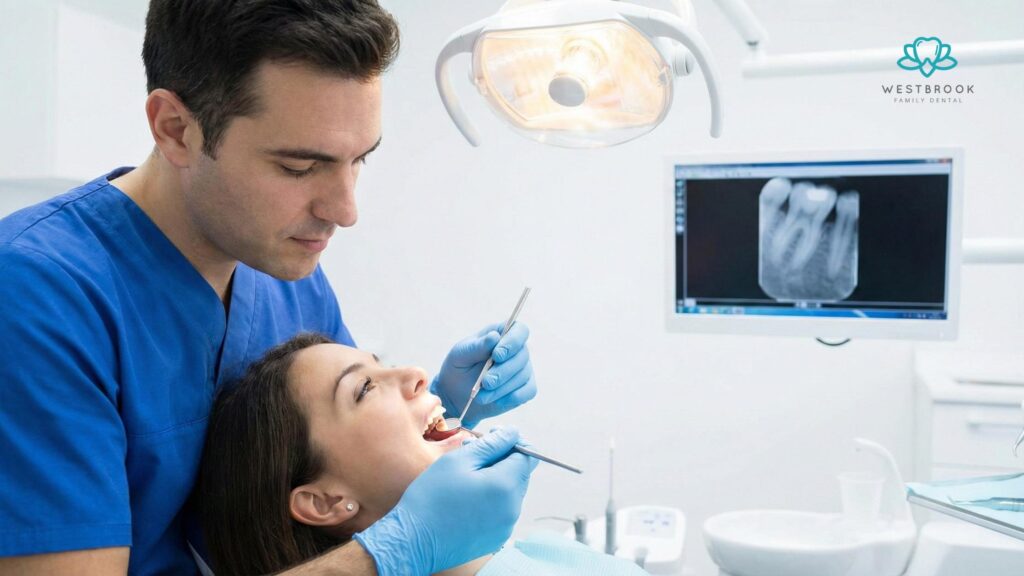
- Imaging: X-rays allow us to see what is happening below the gum line.
- Pain Relief: Our first priority is getting you out of pain, often using local anesthesia which is far more effective than eugenol.
- Treatment Plan: We decide whether the tooth can be saved via a root canal or filling, or if extraction is necessary.
Conclusion: The Final Verdict
Clove oil is a tool, but it is not a cure. It belongs in your emergency kit alongside bandages and antiseptic wipes—useful for the interim, but not a replacement for a doctor. It can mask the pain of a dying nerve, giving you a false sense of security while the infection spreads.
Use it if you must to get through the night, but do not let the temporary relief fool you. If you are experiencing dental pain, throbbing, or sensitivity, you need professional intervention immediately. Don’t risk your smile or your health on a home remedy. Contact an Emergency dentist near me today and treat the problem at its source.
FAQ
1. Can clove oil cure a tooth infection?
No, clove oil cannot cure an infection. While it contains eugenol, which acts as a natural anesthetic to numb pain, it does not kill bacteria deep inside the tooth or root. You must see a dentist to treat the infection before it spreads.
2. Is it safe to put clove oil directly on my gums?
It is risky to apply undiluted clove oil directly to gums, as it can cause chemical burns and irritation. If you must use it, dilute a small amount with a carrier oil (like olive or coconut oil) and apply it carefully to the tooth, avoiding the gum tissue.
3. Can I use clove oil for my child’s toothache?
It is generally not recommended. Clove oil is potent and can be toxic if swallowed by young children. It can also blister their sensitive gums. It is safer to use an age-appropriate dose of acetaminophen or ibuprofen and see a pediatric dentist immediately.
4. How long does clove oil relief last?
The numbing effect of clove oil is temporary, typically lasting only a few hours. It is a short-term band-aid meant to help you manage pain while you travel to an emergency dentist, not a long-term solution.
5. What if clove oil doesn’t stop the pain?
If clove oil and over-the-counter pain relievers aren’t working, you likely have a severe infection or nerve damage. Do not exceed recommended medication doses. Apply a cold compress to your cheek and seek emergency dental care immediately.







Comments are off for this post.