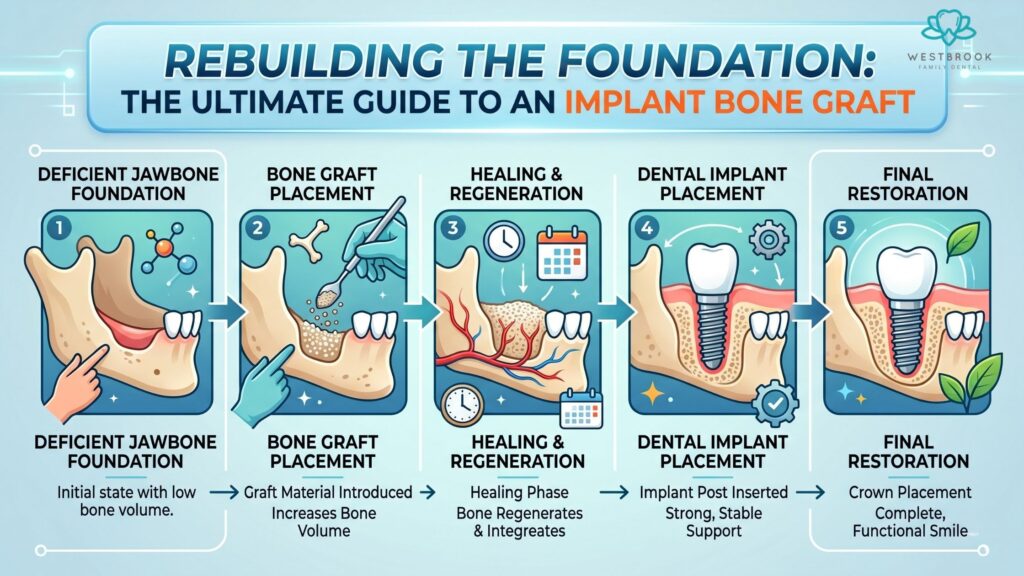
TL;DR: The Quick Breakdown
- What is it? Adding highly specialized bone material to your jaw to reverse bone loss.
- Why it matters: Implants need a thick, dense foundation to survive. Without enough bone, the implant will fail.
- The Timeline: Healing takes 3 to 6 months before the implant can be placed.
The Hidden Crisis: Jawbone Atrophy
When patients are gearing up for the implant procedure, the focus is usually on the shiny new tooth. So, it can be a jarring plot twist when the dentist looks at the 3D scan and says, “We need to build up your bone first.”
Welcome to the world of the implant bone graft.
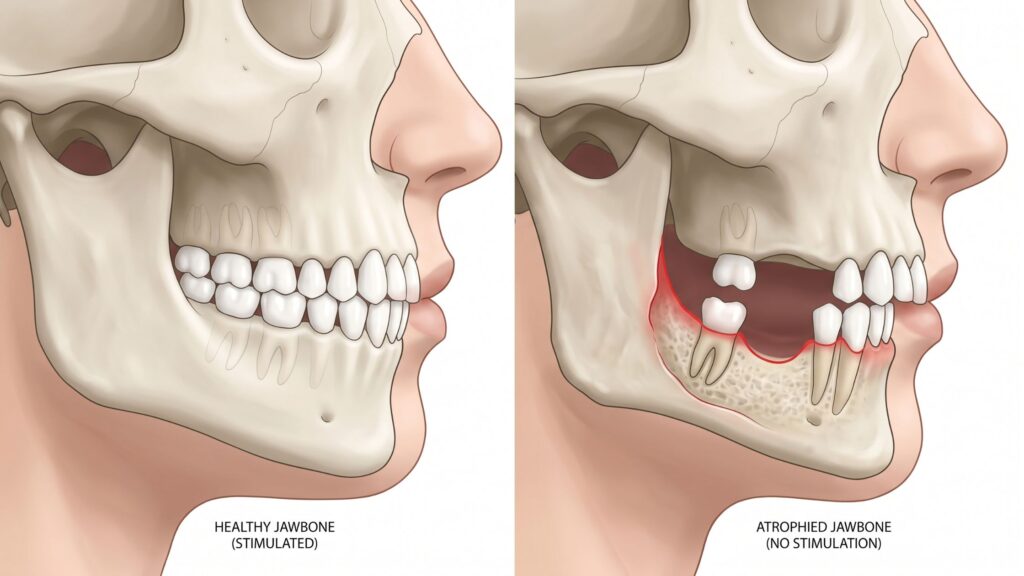
To understand why this is necessary, you have to understand a fundamental rule of human biology: Use it or lose it. Your jawbone exists primarily to hold your teeth in place. Every time you bite an apple or chew a steak, the impact travels down the root of the tooth and stimulates the bone, telling your body, “Keep sending calcium here!”
When you lose a tooth, that stimulation vanishes. Within the first 12 months of losing a tooth, your jawbone can melt away by up to 25% in width. If you try to place a titanium post into a thin, brittle jawbone, it is like trying to drive a heavy-duty screw into a piece of wet drywall. It will inevitably fall out.
How an Implant Bone Graft Works
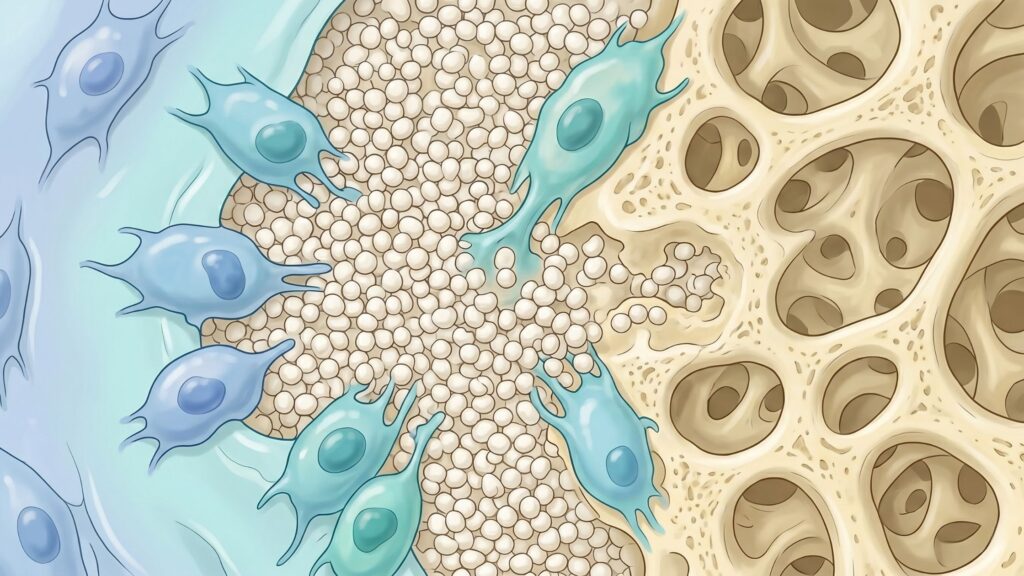
An implant bone graft is a sophisticated architectural rebuild of your mouth. It involves placing grafting material into the depleted area. But here is the fascinating part: the grafting material doesn’t just sit there.
It acts as a biological scaffold. Your body recognizes this scaffold and sends specialized cells called osteoblasts to the site. Over several months, your body consumes the grafting material and replaces it with your very own, brand-new, dense living bone. You can learn more about the specific materials used in our bone grafts clinical overview.
The 4 Types of Bone Grafts Used Today
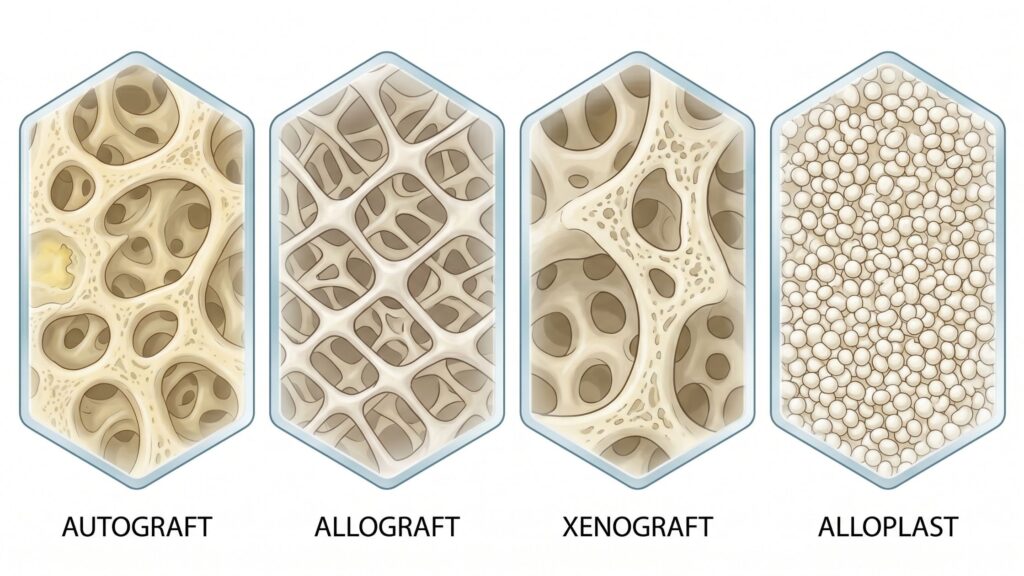
Depending on the severity of your bone loss, your dentist will select a specific type of material:
- Autograft (The Gold Standard): Bone harvested from your own body, usually from the back of the jaw. It boasts the fastest healing time because it contains your own live cells.
- Allograft (The Human Donor): Bone sourced from a certified tissue bank. It eliminates the need for a second surgical site on your body.
- Xenograft (The Animal Source): Typically bovine (cow) or porcine (pig) bone. The organic material is sterilized away, leaving a perfect mineral structure that human bone cells love to grow into.
- Alloplast (The Synthetic): Man-made calcium phosphate materials that safely dissolve as your natural bone grows.
Navigating the Financial Impact
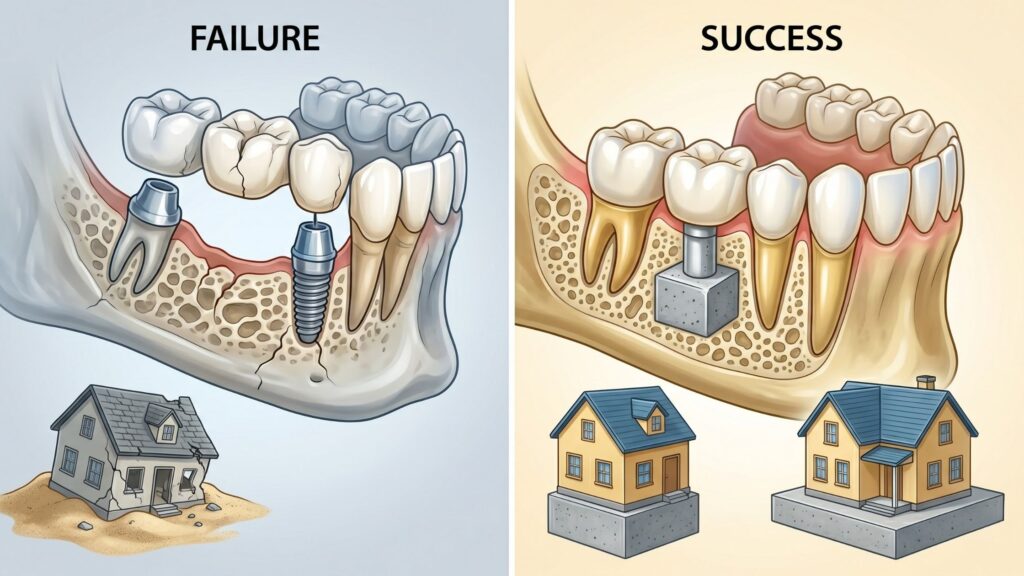
Let’s talk transparently about the implants teeth cost. Adding a bone graft to your treatment plan will increase your total invoice. However, this is the one area of dentistry where you absolutely cannot cut corners.
Skipping a necessary graft to save money is a recipe for a catastrophic, painful implant failure. Think of the graft as the concrete foundation of a house. You wouldn’t build a mansion on sand. Investing in a solid foundation ensures that whether you are getting a single crown or a full implant bridge, it will stay locked in place for decades.
The Recovery Playbook: Week by Week
What is it actually like to recover from this procedure? Here is your timeline:
- Days 1-3 (The Swelling Phase): You will experience localized swelling and minor aching. Ice packs (20 minutes on, 20 minutes off) are your best friend. Stick exclusively to soft foods.
- Days 4-14 (The Healing Phase): Swelling dramatically reduces. The gums close over the graft. You may feel small granules (like grains of sand) in your mouth—this is normal.
- Months 1-6 (The Invisible Phase): On the outside, you look and feel completely normal. On the inside, your osteoblast cells are working overtime, converting the scaffold into solid bone.
How to Find the Right Surgeon
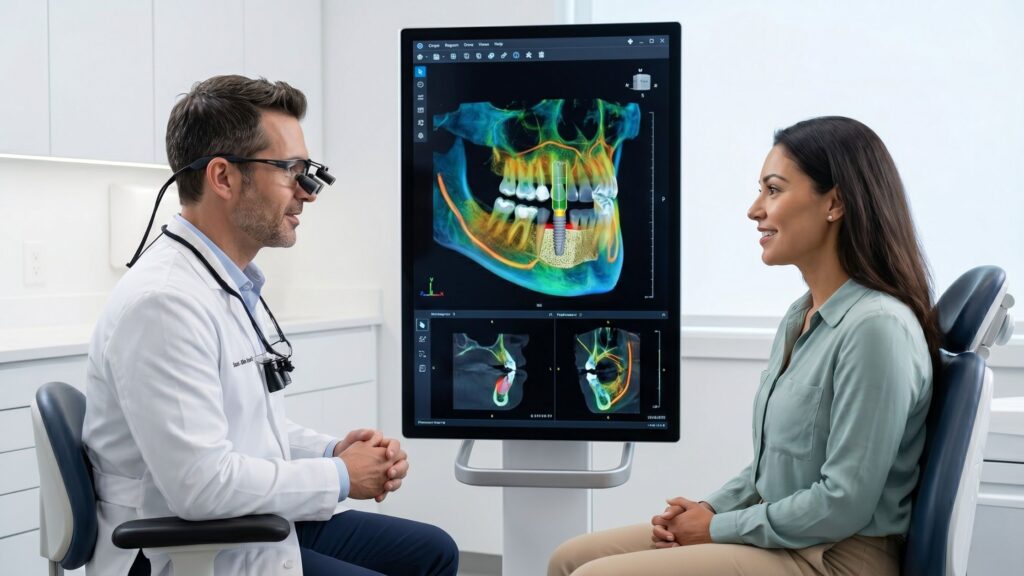
Bone grafting is a delicate surgical art. When you open your phone and search for an “implant dentist near me,” do not just look at star ratings. Look for specific expertise.
Questions to Ask Your Dentist:
- “Do you use 3D CBCT imaging to plan the graft?”
- “What type of grafting material do you recommend for my specific biology, and why?”
- “Can you show me before-and-after x-rays of similar grafting cases you have completed?”
Final Thoughts
Finding out you need an implant bone graft shouldn’t be a source of anxiety; it should be a source of relief. It means your dental team is catching a structural flaw before it ruins your new smile. By trusting the process and allowing your body the time it needs to rebuild, you are setting the stage for a flawless, permanent dental restoration.







Comments are off for this post.